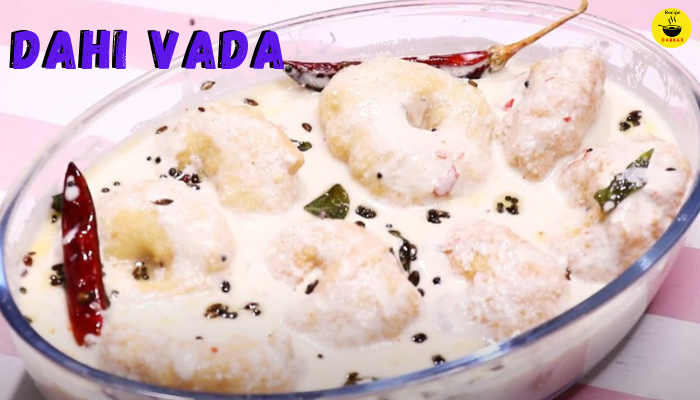
If you are looking for an ideal dessert snack or tasty street food snack recipe, then Dahi vada/Dahi Bhalla is the best option to make at home. These snacks are super soft; they melt in the mouth. These are deep-fried lentil(Urad Dal)soft fritters, soaked in creamy, sweet, spicy, and tasty curd/yogurt. Topped with different types of chutney and garnished with Indian spice powder. This combination gives a good taste and texture. Really, it’s a big flavour and texture payoff for little effort.
This Dahi vada is very common in both households and also popular in the streets of the Indian market. If you are seeking street-style chatpata snack recipes, especially those that are quick and easy to prepare, here’s a full Dahi vada recipe, including ingredients, preparation, and a step-by-step making process with photos, video, along with proper tips, valuable tricks, and guidance. It helps you to recreate this delicious Dahi vada snack.
About Dahi Vada
Dahi is a Hindi and Odia word; dahi means curd or yogurt, and vada are deep-fried fritters or dumplings. Dahi vada is a popular Indian street food and snack made from a batter of urad dal. The recipe is straightforward as it is sound.
In different regions, Dahi vada has different names:
- Tamil – thayir vadai
- Odia – Dahi bara
- Bengali – Doi bora
- Telugu – Perugu vada
- Kannada – Mosaru vade
Before making the vada soft and fluffy, beat the batter thoroughly to form a light and airy texture. Then, fry in medium-hot oil until golden, and briefly soak in water to soften and wash away the excess oil. After 20 to 30 minutes, gently squeeze and remove excess water, then season with creamy yogurt as it is thicker compared to water, and top with sweet, tangy, and spicy chutney. The toppings vary largely depending on which area of India you live in. Finish with spice powder like cumin powder, chaat masala, chilli powder, and fresh coriander. Serve chilled Dahi vada that provides a refreshing taste. Often, Dahi vada served as a dessert snack.
This popular street food can be found in every food center in the city, and especially on cycles with a huge aluminium container behind, sitting under a tree and road side.
Most homes make this delicious, delectable Dahi Vada during special occasions like Diwali, Holi, Navratri, festivals, celebrations, and parties. It also served as a snack or a meal.
Variations:
Each region, state, and even a city has its own contribution to this popular and demanding street food category.
- In Odisha, they call Dahibara Aludam – Fried Vadas re-soaked in tempered curd with panchphutana, curry leaves, dry red chilies, and then served with aloo dum (Potato curry) and Ghuguni ( Peas curry ).
- In South India, they call it thayir vadai or perugu vada may use a strong tempering rather than chutneys.
- Some people soak vadas in milk instead of water to balance the tanginess of the vada.
Why do I love Dahi Vada?
Dahi vada is a combination of all your favorite flavors, like sweet, tangy, fluffy, tender, and soft. This contrast creates a complex and satisfying, delightful mouthfeel for me.Dahi/curd-based snacks or recipes are my all-time favorites. One bite makes it a go-to snack for cozy moments.
In the summertime, Dahi vada is one of my favorite snacks as well as meals. Because its main base is curd/yogurt, which helps to beat the heat, it refreshes and soothes everyone, providing relief from the temperature.
The Inspiration
In Odisha, I tasted a popular street food, dahi vada aludam, which is a variant of dahi vada. It originates in the state of Odisha, Cuttack. They serve dahi vada aloo dum with Ghuguni (aloo peas curry) along with all chaat toppings. Aloo dum is a spicy slow slow-cooking potato curry. The chaat is a spicy, tangy concoction of these two, generously topped with chutney, chopped onions, crispy sev, chopped coriander, and different chaat spices. One interesting thing they serve the chaat in a bowl made of khali patra.After placing the dahi vada, both the bowl smell and the chaat aromatic flavor are lip-smacking.
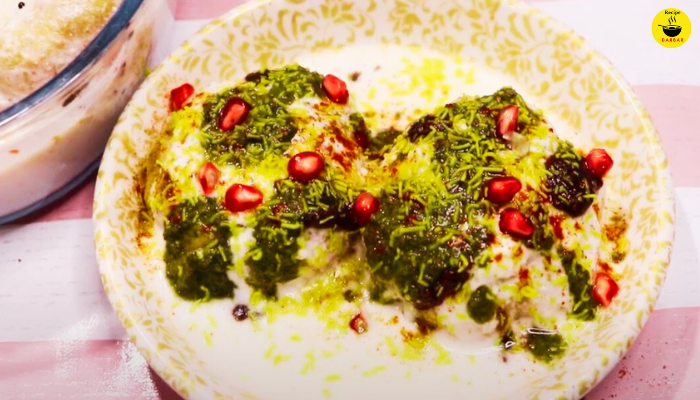
I make the recipe in Odisha-style Dahi Vada and serve it in 2 styles. I hope you all enjoy that.
Recommended Kitchen tools to make the Bread Pakora recipe:
- A large pot or pan – For mixing, use a pot or pan of the right size.
- Spatula – to stir and turn.
- Slotted Spoon – To remove fried dumplings from hot oil.
- Mixing bowl – Useful for kneading and shaping.
- Measuring Cups and Spoons – For accurately measuring the ingredients.
- Non-Stick or Cast-Iron Frying Pan – For deep-frying.
- Paper Towels – For draining excess oil.
- Serving Plate or Platter – To present the finished dish.
- Whisk or spoon – For blending the batter to a smooth, lump-free consistency.
🥣 Ingredients We Need to Make the Dahi Vada
For Vada:
- Urad dal – 1 cup
- Salt to taste
- Hing /associated – 1/4 tsp
- Jeera /Cumin seeds – 1/2 tsp
For yogurt/soaking:
- Curd – 1 +1/2 cup
- Black salt – 1/2 tsp
- Salt to taste
- Chilliflakes – 1tsp
- Roasted Jeera powder – 1 tsp
- Oil to deep fry
For tadka:
- Oil – 2 tbsp
- Panchaphutana – 1 tsp
- Curry leaves – 8 to 10 nos
- Whole red chilli – 2
For garnish/chutneys & toppings:
- Curd – 1/2 cup
- Sugar – 1 tsp
- Salt to taste
- Tamarind chutney
- Green chutney
- Cumin powder
- Chilli powder
- Black salt
- Nylon sev
- Pomegranate seeds
How to make Dahi Vada (step-by-step process )
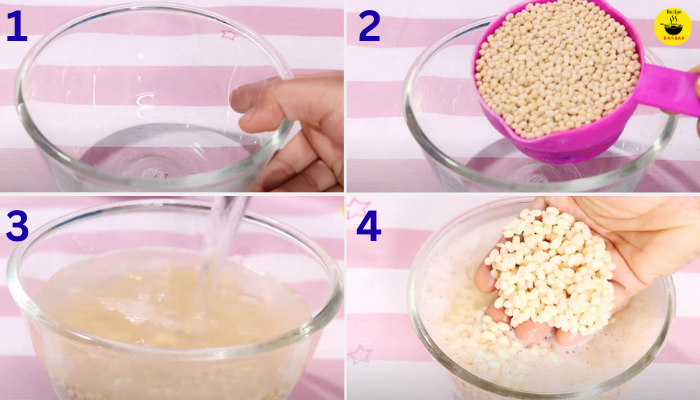
Step 1: ( Soak the Dal )
- Take 1 cup of urad dal, wash and rinse the dal a couple of times, then soak in enough water for 5 to 6 hours (or overnight).
Step 2: ( Grind to batter )
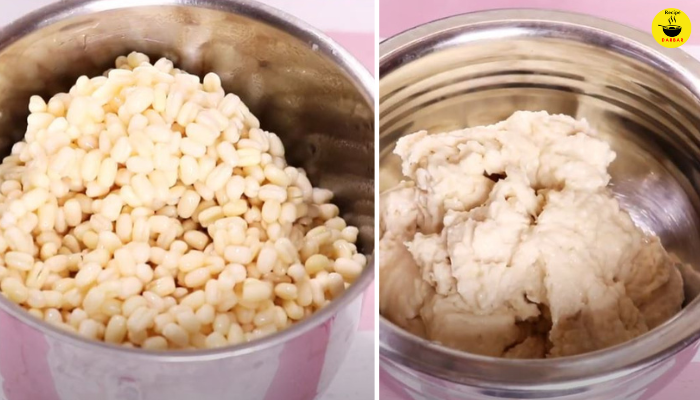
- Dal soaked well and doubled in size. Drain the excess water from the soaked dal and transfer to a mixing jar. Grind with minimal water into a smooth, thick batter. The batter should be dense, but it will be whisked to make it light.
Step 3: ( Mix and Whip the Batter )
- Transfer the batter to a bowl and whisk it in one direction using your hands for 5 to 10 minutes. This step is important to make the vadas soft and fluffy.
- Add salt, asafoetida, and cumin seeds. Use a whisk or spatula and beat vigorously for a few minutes so it becomes fluffy and gives a soft texture to the vadas.
- Cover and rest it for 4 to 5 hours.
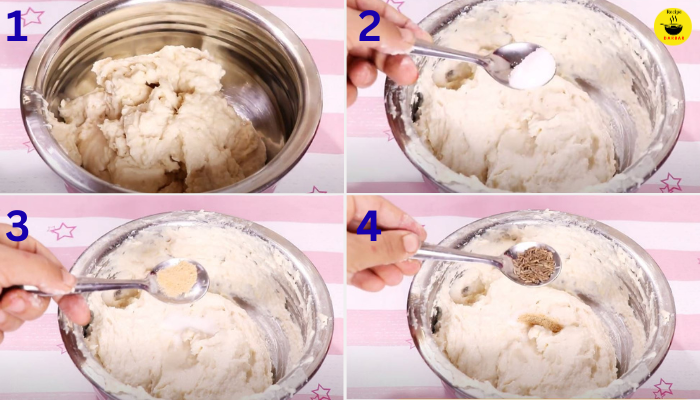
Step 4: (Prepare yogurt mixture )
- Check the test of the curd before you assemble. The curd should not be sour, bitter, or acidic. It should be fresh.Home made curd is best i alwayes prefer.
- Take a big-sized bowl, add curd and water to adjust the consistency and make it pureable. You can make it thick or thin as per your choice.
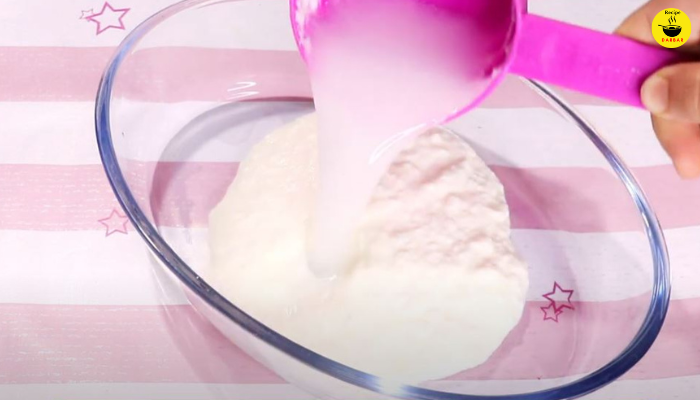
- Add salt, black salt, chilli flakes, and cumin powder, then whisk and mix it once.
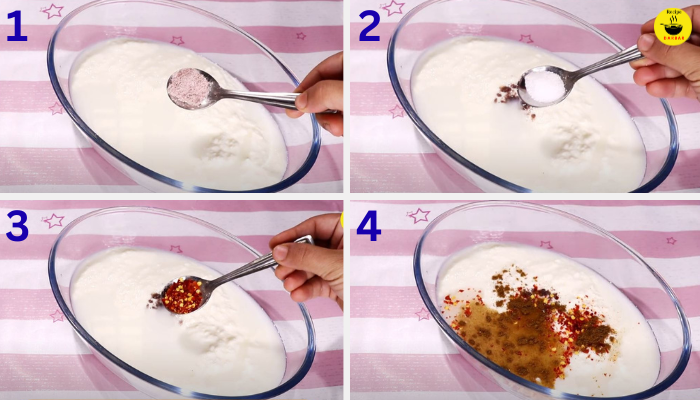
Step 5: ( Tempering the curd )
- Heat a tadka pan, add 2 tbsp cooking oil. Add panchaphutana and allow to crackle, then add curry leaves and whole red chilli.
- Pour this tempering over the curd and keep aside.
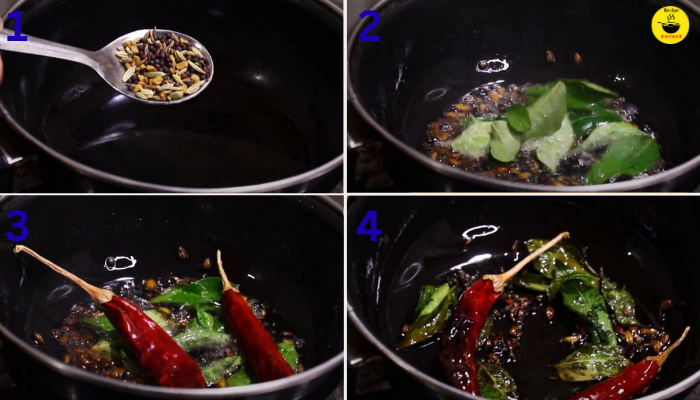
Step 6: ( Fry Vadas )
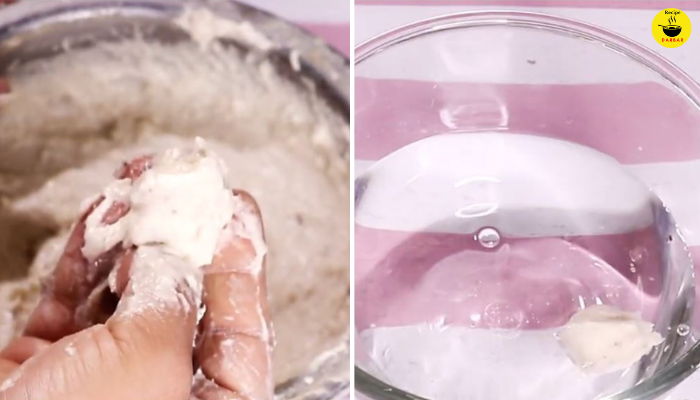
- The batter should be well-fermented; mix it well. Take a small-sized batter drop and place it in a water bowl. If it floats in the water, then it is well-fermented and ready to make vada.
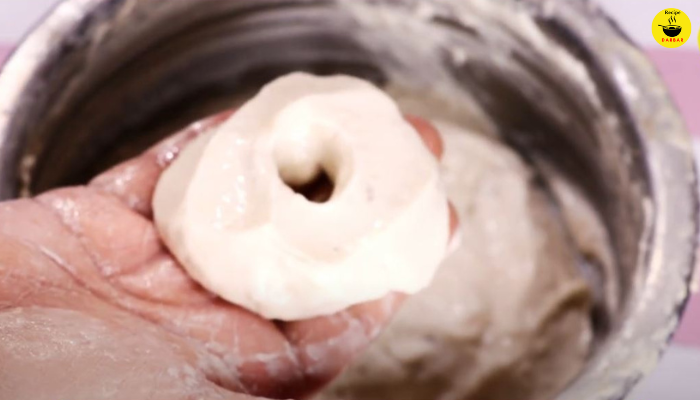
- Apply water to the palms, take a lemon-sized portion of batter, wet your finger make a hole in the center. Get a better idea from the picture below.
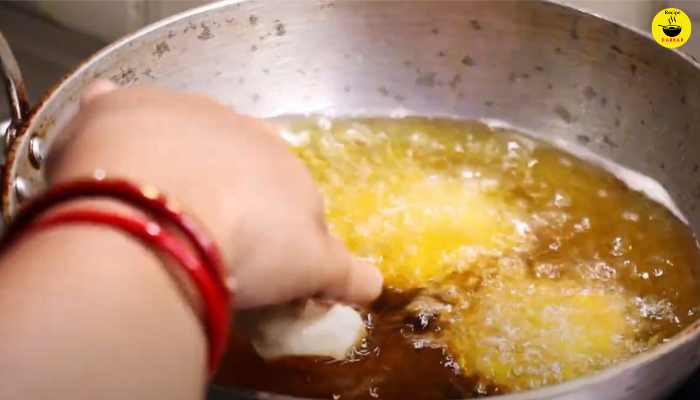
- Carefully drop the shaped vada into the hot oil. Keep the flame medium, flip and fry using a slotted ladle until golden on both sides.
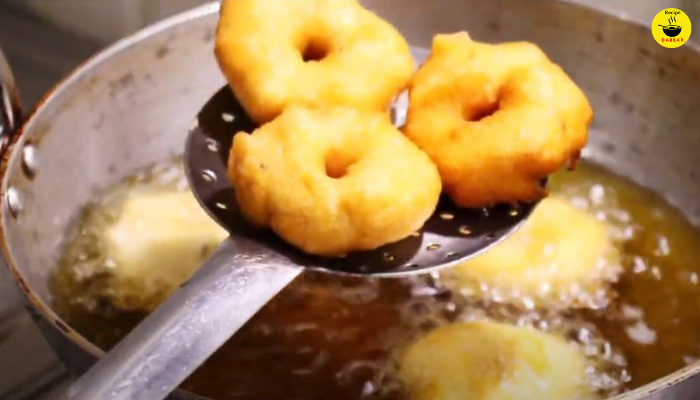
- Continue with the rest of the batter and fry in batches. Remove the Vada with an aslotted spoon and place on a paper towel to remove excess oil.
Step 6: ( Soak the Vadas )
- Take a bowl of normal or lukewarm water and drop the fried vadas and soak them for 20 to 30 minutes or till they soften. The vada will release the oil and increase the size by absorbing water. The color also changes to light.
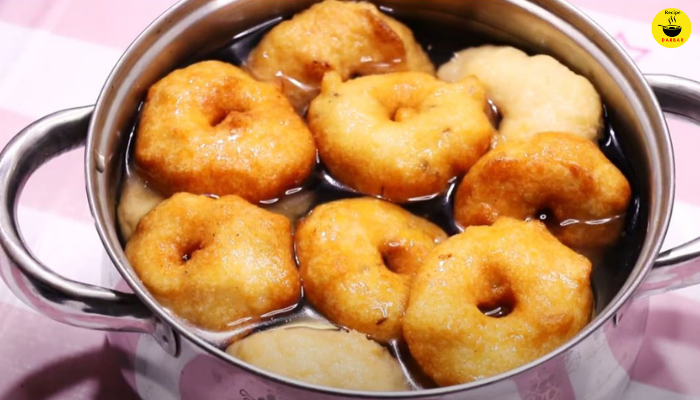
Step 7: ( Assemble )
- After soaking, the vadas double in volume. Gently press the vadas between your palms to squeeze out excess water. Handle them gently, they may break.
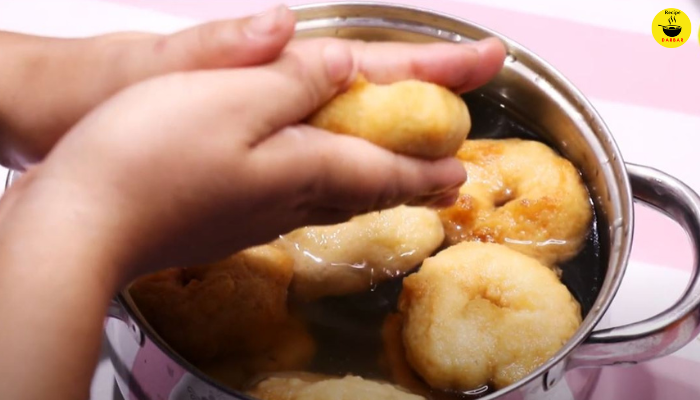
- Dip the vada directly in this tadka/tempering flavored curd.
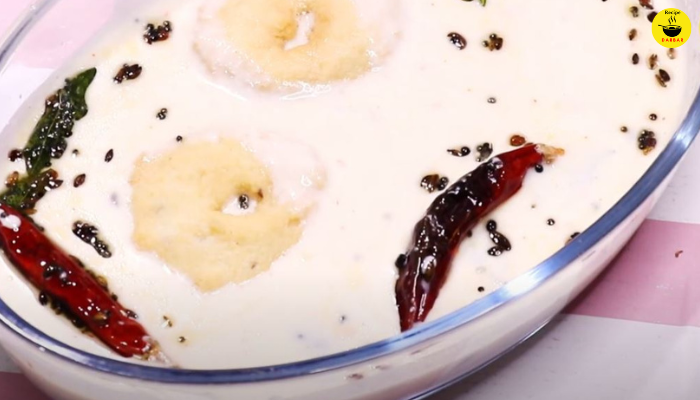
- For the best flavor, leave it for 1 hour. Super soft and juicy Dahi vada is ready to eat.
Step 8: ( Serve )
- For sweetened curd, take ½ cup curd with a little amount of sugar and salt. Mix and whisk it once, then it’s ready.
- Transfer the soaked vada to the serving plate. Pour the sweetened curd over the vada.
- Top the vada generous amount of sweet tamarind chutney and green chutney.
- Sprinkle cumin powder, red chilli powder, black salt, nylon sev, and pomogranate seeds. You can adjust the amount of chutney and spices according to your taste buds.
- Serve this Dahi vada immediately after sprinkling the spice powder.
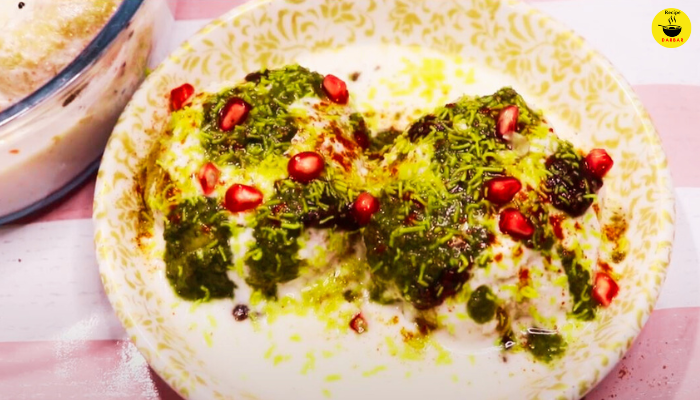
Chutney
These two green chutneys and tamarind chutney are the key ingredients to enhance the taste of Dahi vada.
- Green Chutney – These herby, spicy mints give a refreshing taste, complementing the richness of the Dahi Vada.
- Tamarind chutney – This chutney offers a tangy sweetness that balances the flavors and contrasts with the Dahi vada.
Tips & Variations
- Soak the dal for at least 4 to 6 hours. After soaking, blend the dal with very little water while grinding for the desired consistency.
- Batter consistency is the key step to shaping the vada. So it should be right consistency, not too runny, not too thick. If the batter is runny, add a bit of rice flour or semolina to adjust.
- Whisking the batter in one direction is key to making soft and fluffy vadas.
- For soft vada, soak the fried vada immediately in water and rest it for 20 to 30 minutes.
- Once the vada is soft, squeeze out the excess water and add them to the whisked tadka yogurt.
- Chilled yogurt provides a better contrast compared to regular yogurt.
- After frying, soak the vadas in water minimum of 30 minutes before transferring to yogurt. It helps them soften further.
You might enjoy this recipe too. If you loved that, try this from our favourites:
Quick Safety Tips While Cooking
- Be careful with hot oil – Add ingredients slowly to prevent splattering.
- Keep the stove attended – Never leave your dish unattended on a high flame.
- Use the Right Equipment – Use a nonstick cookware or a heavy-bottomed pan.
- Control Oil Temperature – Maintain optimal range & avoid overheating.
- Keep the stove attended – Never leave your dish unattended on a high flame.
- Avoid Overcrowding – Frying in small batches.
Frequently Asked Questions for Dahi Vada Recipe
Which Dal is used in the Dahi Vada recipe?
For Dahi vada, use Urad dal or moong dal, or a combination of both.
How long should urad dal be soaked for dahi vada?
To get good and soft vada, soak the urad dal for 4 to 5 hours or overnight.
Why does dahi vada become hard after frying?
Why does dahi vada become hard after frying?
Is Dahi Vada Healthy?
It is better to eat occasionally. Otherwise, homemade steamed dahi valla is best.
Can dahi vada be made in advance?
It can be made ahead for the best taste and flavour.
Can Dahi vada be made in a vegan version?
For a Vegan version – Use plant-based yogurt like cashew, almond yogurt) and proceed similarly.
How much time to soak the fried Vada?
Soaking the vada well for 30 to 1 hour is very important.
How many vadas with 1 cup of dal?
Soaking the vada well for 30 to 1 hour is very important.
How many vadas with 1 cup of dal?
One cup of soaked and ground urad dal yields approximately 12 to 15 vadas.
Conclusion & Suggestion :
Dahi vada is a perfect street snack, where every bite feels better and melts in the mouth. Get ready to impress your family members and friends with these unique, delicious, fluffy, tangy, tender snacks. This Dahi vada dish brings together the perfect harmony of textures and flavours. Enjoy it fresh, garnish it generously, and serve it immediately.
💬 Tried This Recipe?
Let us know how it turned out in the comments below!
If you make this recipe or anything from recipedarbar, share your version on Instagram and tag us with #DahiVadaRecipe
👉Follow us for more Indian recipes that excite your palate.